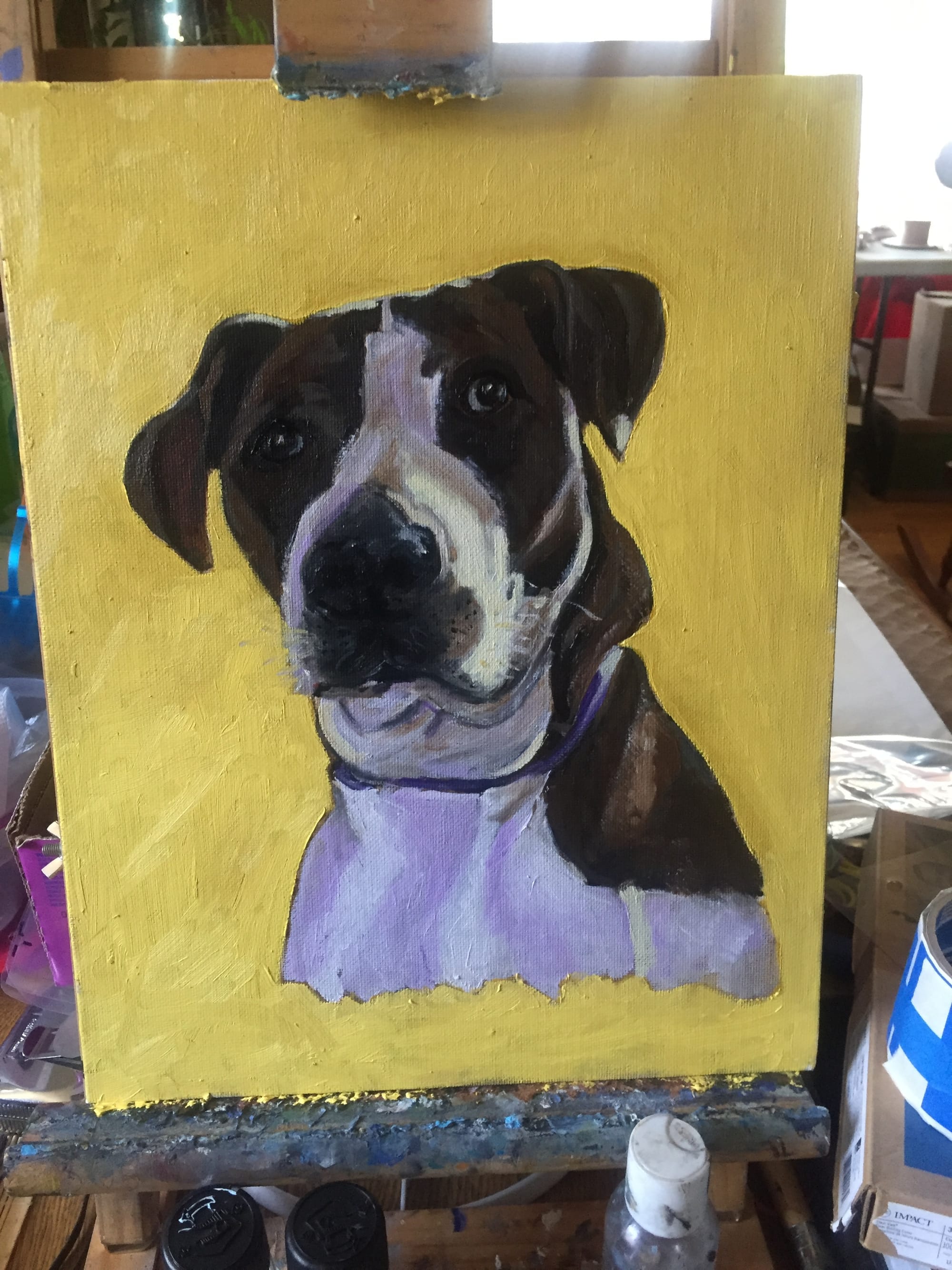
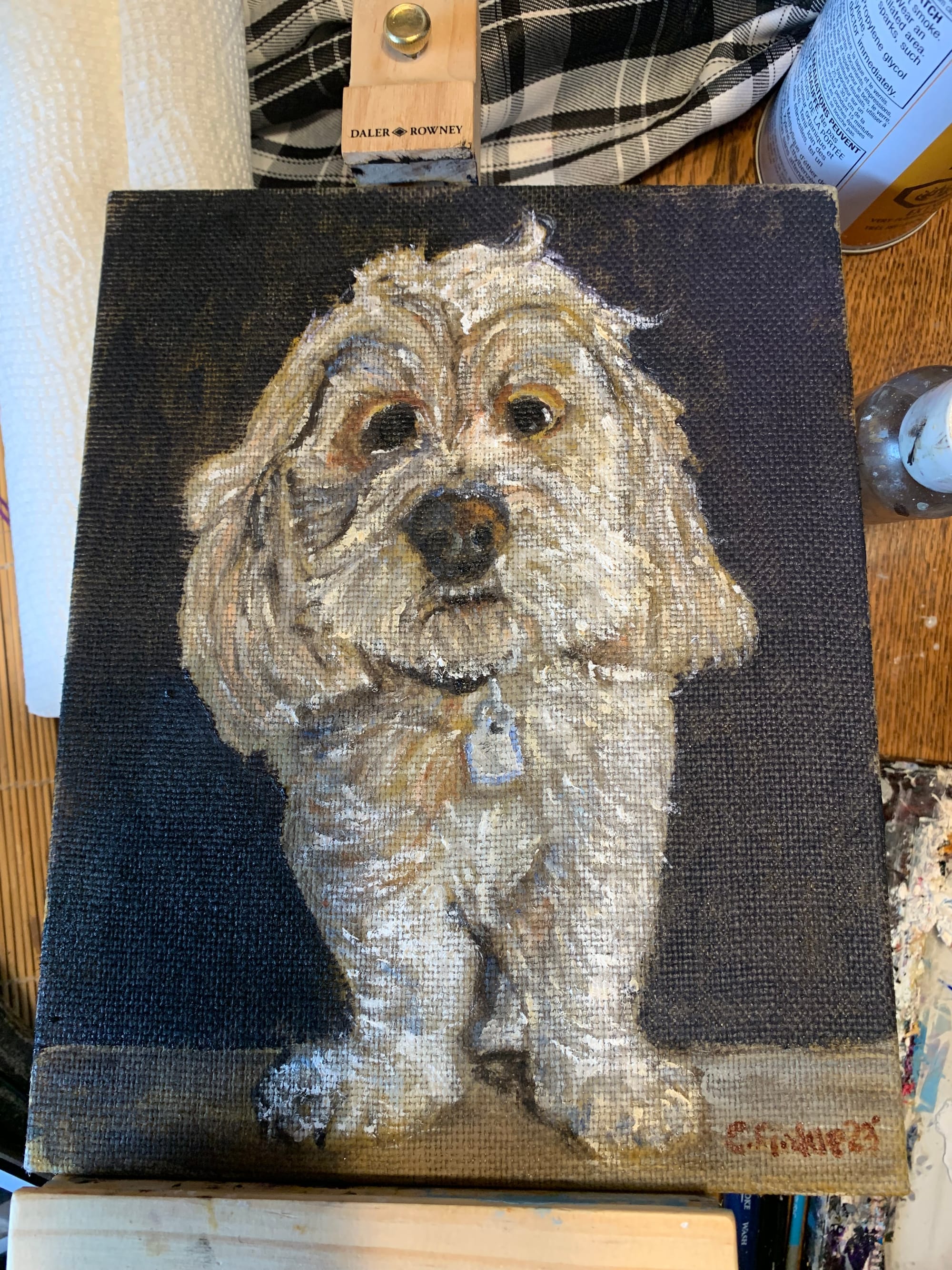
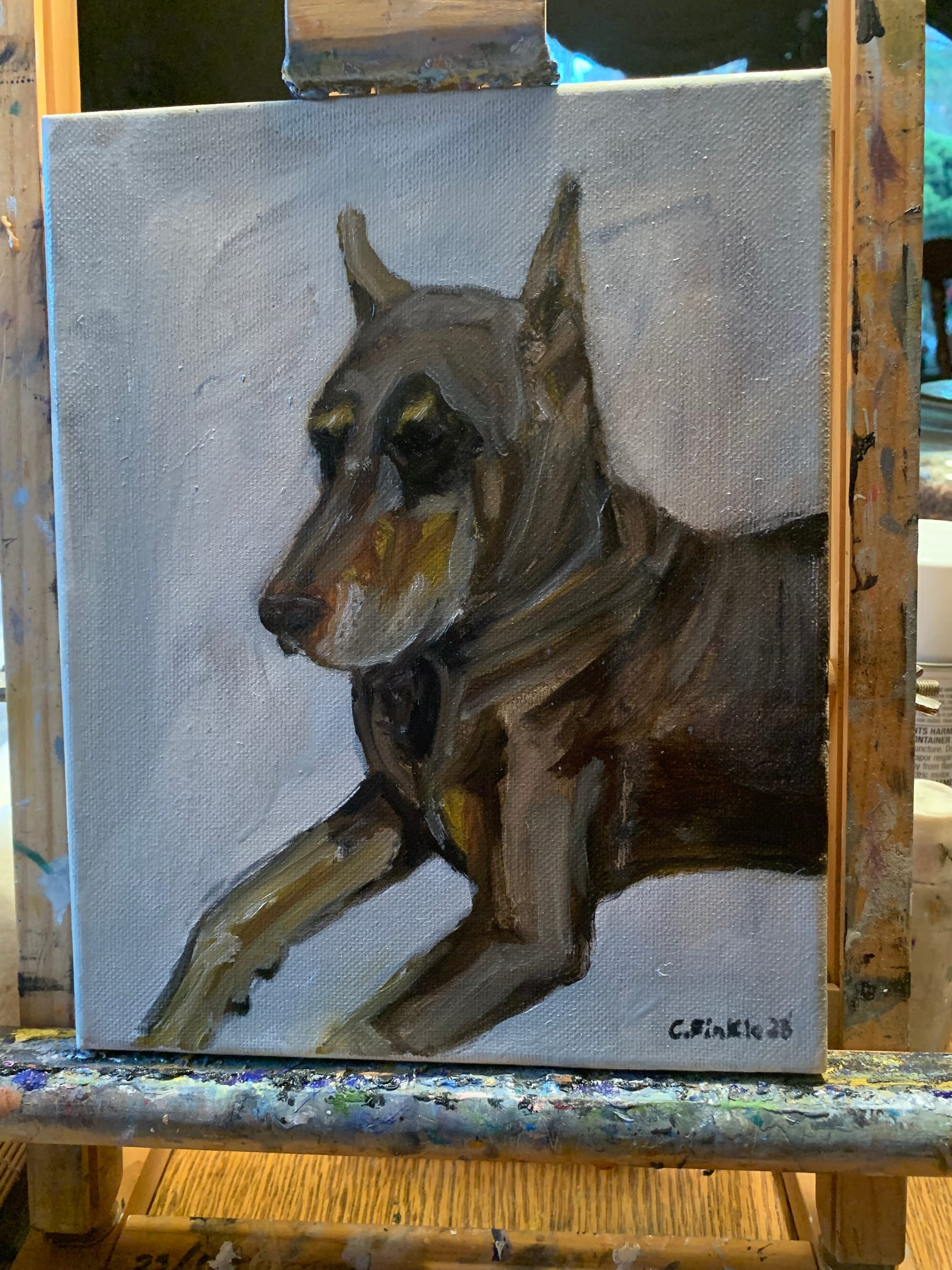
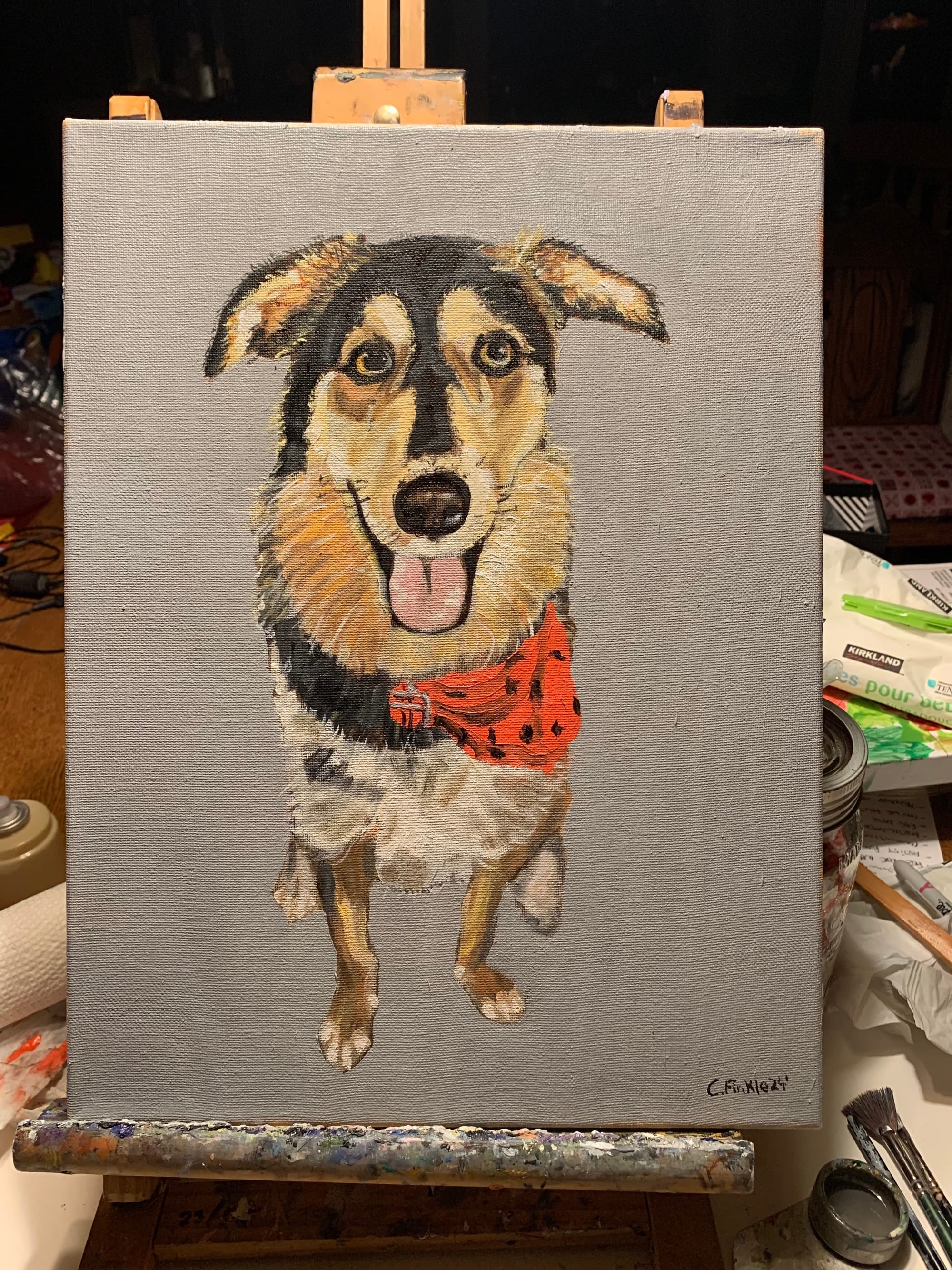
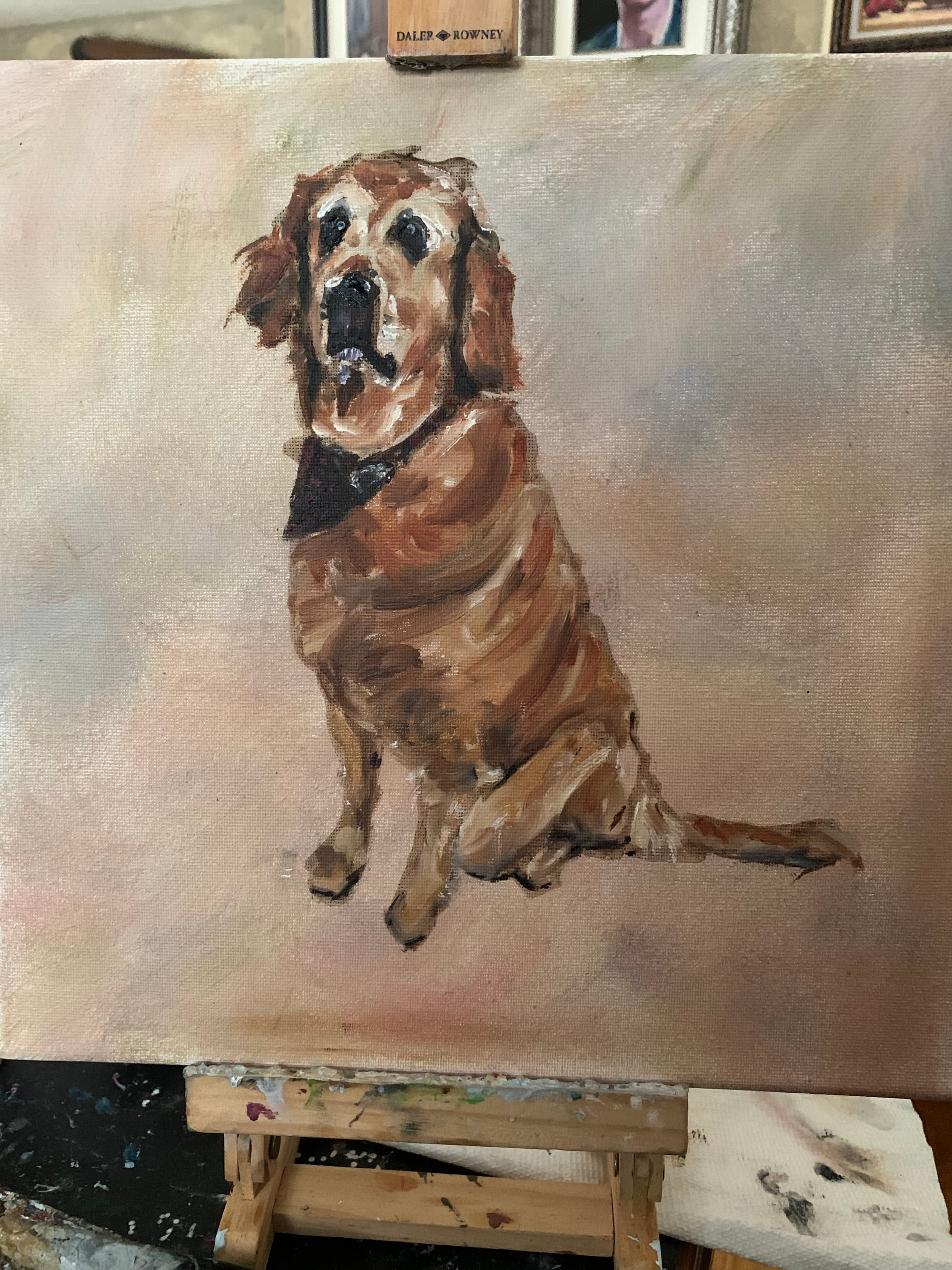
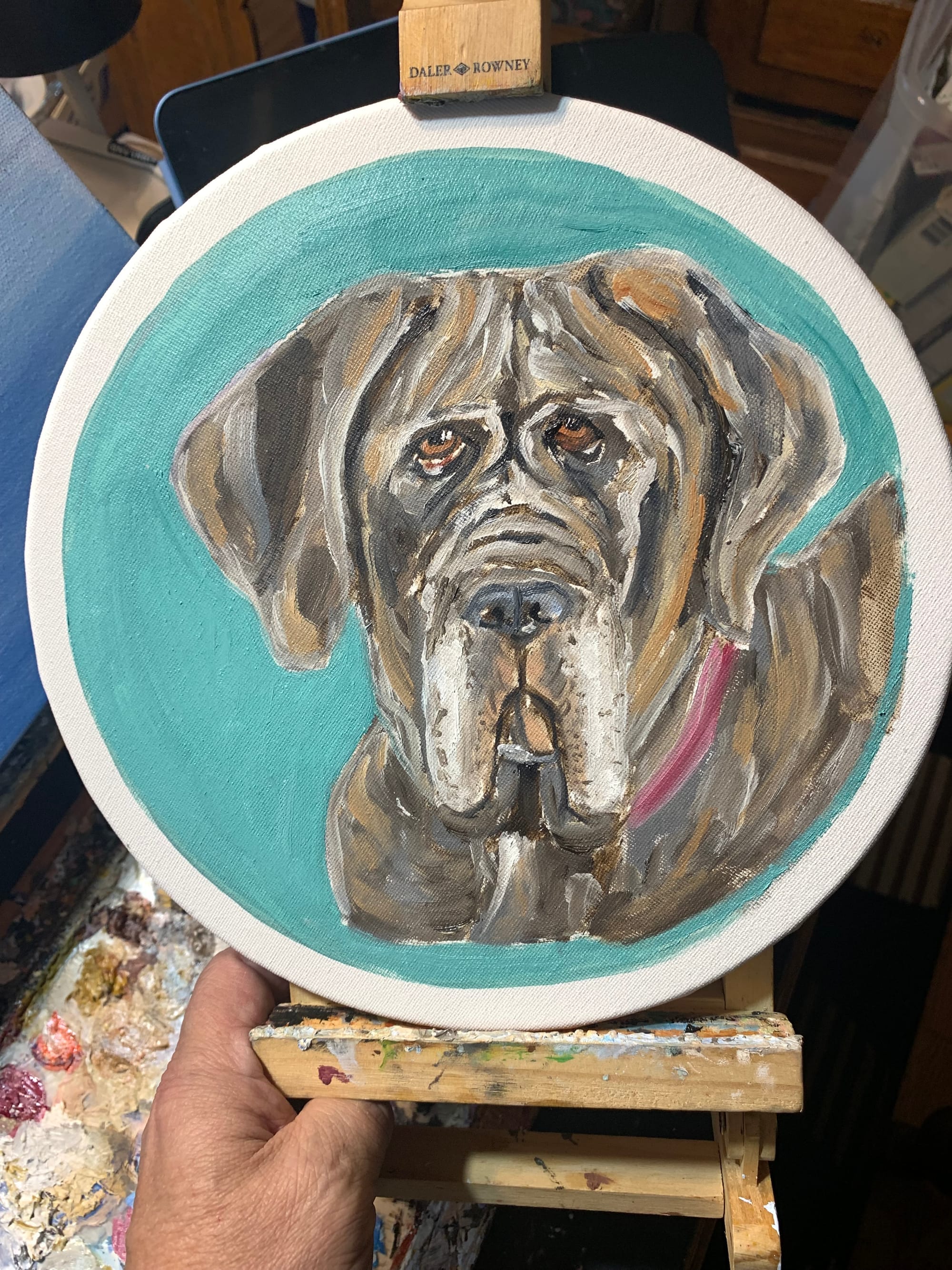
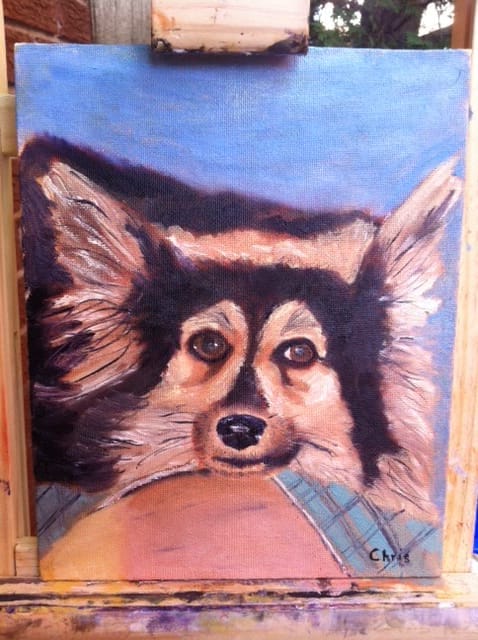
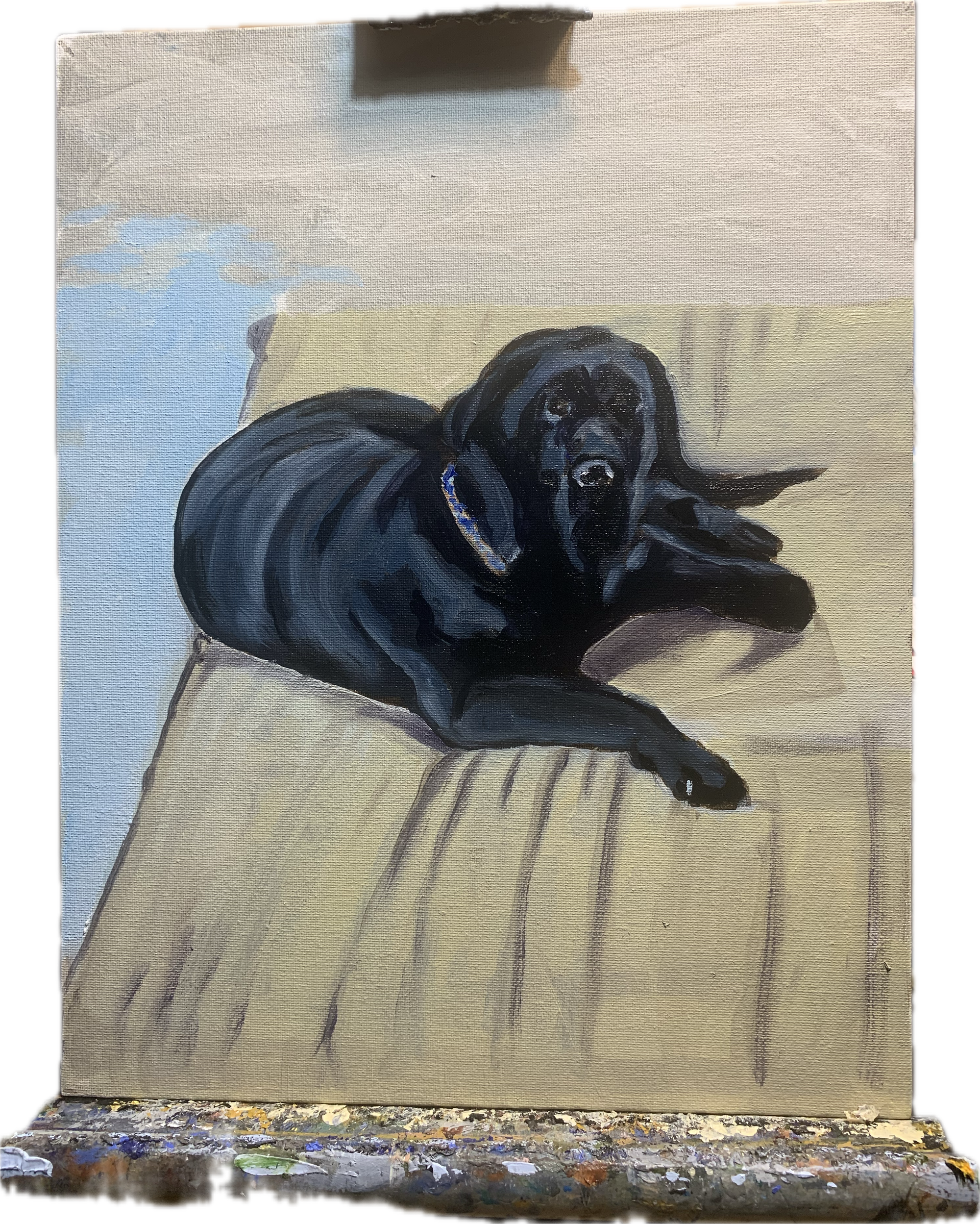
Pet Portraits

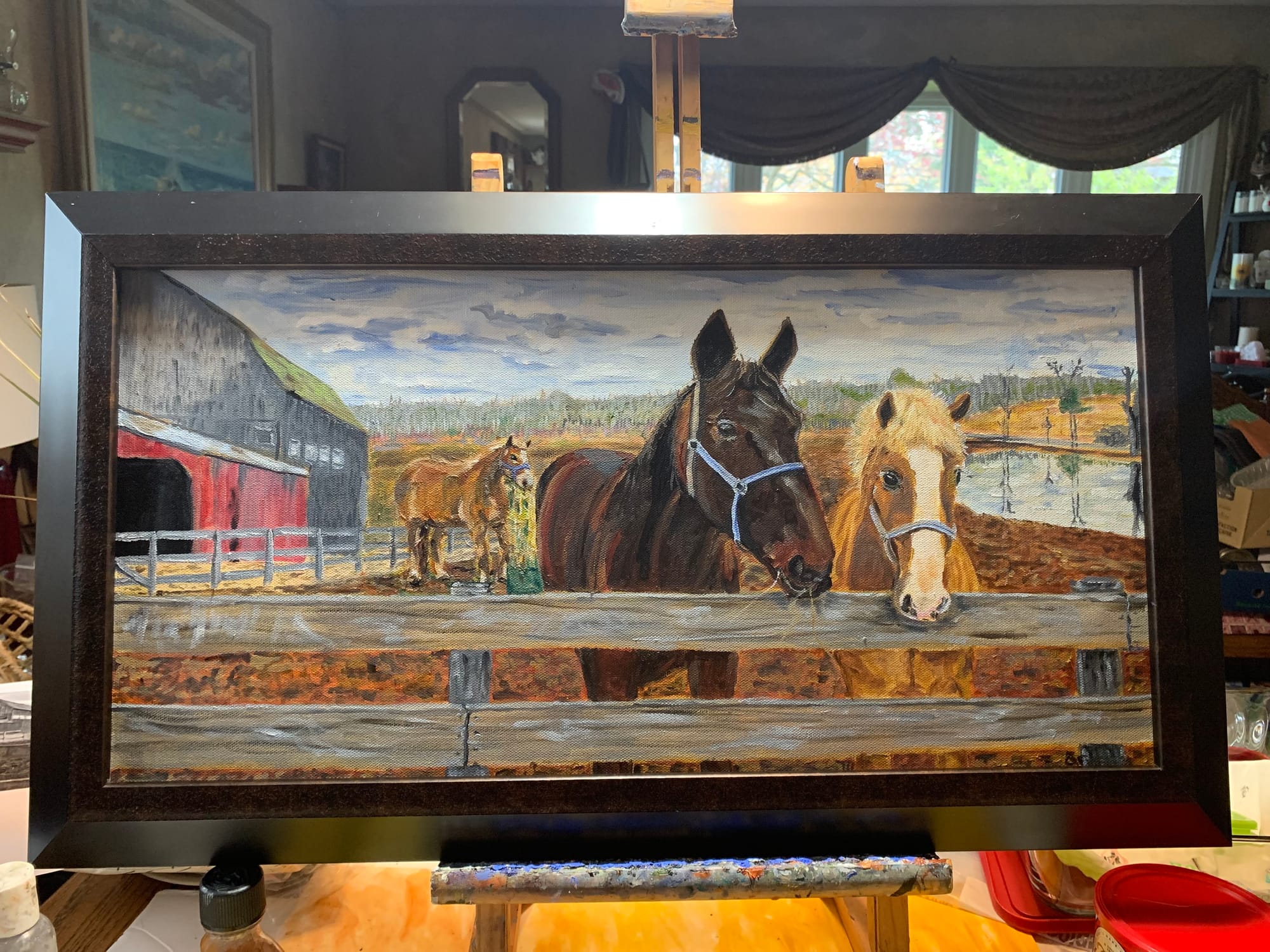
The first time I painted a pet portrait, I learned that honour has weight.
It was a small canvas—too small, I would later realize—for the responsibility it carried. The photograph showed two Golden Retrievers lazing in late-afternoon light, their eyes softened by the patience of age. Both dogs had passed earlier in the year.
Along with the photo, there was another image: the shoreline of a peaceful lake. The portrait was intended as a gift for someone special, and it arrived with a short note:
“They waited for me every day. I don’t know how to stop looking for them.”
I cleaned my brushes more carefully than usual before I began. I mixed my colours slowly, whispering the dogs’ names once, as if asking permission. It felt wrong to rush.
A pet portrait isn’t about resemblance alone—it’s stewardship. Someone is trusting you with love that has nowhere else to go.
There was one simple request: could I place the dogs on the beach? That was where they had lived their best dog life.
As the painting took shape, I realized I wasn’t painting dogs. I was painting a relationship. The slight tilt of their heads held the echo of years of listening. The worn fur around their eyes carried every morning walk, every quiet night on the couch. When I laid in the final highlights, my hands trembled—not from doubt, but from understanding. This was an act of care, not creation.
When the man came to collect the painting, he didn’t speak at first. He reached out, then stopped an inch from the canvas, as if touching it might disturb something sacred. Then he laughed softly and cried at the same time.
“That’s them,” he said. “That’s where they lived—in my eyes.”
I learned then that a pet portrait is a kind of memorial that still breathes.
Over the years, some portraits have been joyful celebrations of lives still unfolding. Others have been gentler, quieter—painted after the bowls have been put away, after the house has learned its new silence.
People often apologised when they spoke of their grief.
“I know it was just a dog.”
“She was only a cat.”
I shake my head every time. There is no only in love. Fur doesn’t make devotion smaller. If anything, it makes it braver—because animals love without defence, and when they leave, they take that purity with them.
Painting pets who have crossed the threshold of this world has taught me something essential: honour lives in attention. In noticing the white fleck on a black paw. In refusing to smooth away a crooked ear. In painting the scar that told a story only the two of them knew. Honour is telling the truth of who that animal was—not perfect, but deeply, fiercely themselves.
When the paintings are finished and hung in homes, they become quiet companions. Not replacements—never that—but witnesses. They hold space for memory on days when remembering hurts too much, and on days when it feels like gratitude instead of pain.
A painting can’t bring a beloved pet back. But it can do something just as important: it can say they were here. They mattered. They were loved in a way that changed the shape of a human heart.
And every time I sign my name in the corner of a canvas, I feel the same gravity I felt with my first pet portrait. The honour doesn’t fade. It deepens.
Because to paint a pet—especially one who has left this world—is to promise that love doesn’t end at goodbye. It only changes form, settling into colour and light, waiting patiently on the wall… the way they once waited at the door.